Podcast
Exploring the Continued Relevance of Lean, A Best of Podcast
Lean offers a powerful and productive approach to today's problems, both large and small. This "best-of" podcast featuring talks with leading thinkers offers advice and…
Listen to podcast
Podcast
Exploring the Continued Relevance of Lean with Womack, Jones, Gaudet, and Others in a Best-of Podcast
The global pandemic coupled with profound structural economic shifts are two daunting challenges reinforcing the need for a powerful method of framing and facing crucial…
Listen to podcast
Article
The Road to Becoming a Lean Leadership Team Has Potholes
Lean veteran Orry Fiume shares the story how the leadership team at The Wiremold Company took on the challenging work of transitioning from being traditional,…
View article
eBook
The Birth of Lean: Conversations with the Founders of TPS
Fascinating interviews with the founders of lean. Learn about the origins of the Toyota Production System from the people responsible for its creation. As its pioneers…
View event$30.00
Article
Orchestrating Your Product Development Process with Milestones
"Effective milestones are an important part of a company’s development process, especially in today’s era of team-based sprints and stand-ups," writes Jim Morgan. "Yet many…
View article
Article
How Do You Know If You’ve Created a Meaningful Challenge?
"Have you ever issued what you thought was an inspiring challenge for your team, only to discover they were underwhelmed and far from motivated?" asks…
View article
Article
From Port to Plate: How Legal Sea Foods Is Improving Through Lean
Legal Sea Foods is working with LEI to help launch a movement to change everything about the way traditional restaurants work. Legal, a family business…
View article
Article
PD C+ A+ In the Classroom
Looking back on her time as a teacher through a lean lens, the author suggests how the process of education might be improved by examining…
View article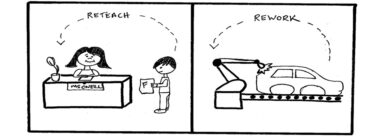
Article
Questions and Coaching on A3 Thinking
In this Q&A, LEI's Deborah McGee shares insights into A3 thinking and problem-solving: "The A3 Management process is really a way of thinking and a…
View article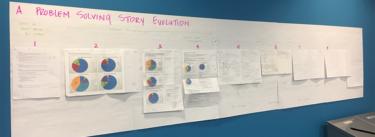
Article
Why We Believe that Lean is About Changing Our Own Behaviors, and Not Just Accumulating New Knowledge
Lean repeatedly pushes us to develop new competences (or recover lost know-hows) through kaizen and problem solving. This collection of short articles from seven leading…
View article
Article
Making Everyone Whole
I've had a big smile on my face for much of the last month because I've had the opportunity to visit progressive organizations on three…
View article
Article
Why don't people learn from experience?
Dear Gemba Coach: On the gemba, we have many problems to manage every day. People don’t seem to learn from their experience. Is there any…
View article Article
How do I know people are displaying the right visual information in an office?
Dear Gemba Coach: We’ve been quite successful with lean in our operations, and I’ve been tasked to bring it to headquarters. We’ve set up obeyas…
View article Article
If lean is all about people, why are the discussions impersonally cold and rational?
Dear Gemba Coach: Lean thinkers say it’s all about people, but the debates are then all so cold and rational. Where are the emotions and the…
View article Article
Expanding Our Perspective on Lean, Part 3: Lean is a Practice in Search of a Language
To explore the idea that there may be other angles for understanding lean management than business or analytical perspectives, a group of lean management practitioners…
View article
Article
Why We Believe that Lean is More Than A Manufacturing Approach
Is Lean thinking a thing of the past from glorious manufacturing times in the late twentieth century? Or, on the other hand, is it possible…
View article
Article
Just-In-Time Roundup: Great Lean Reads from Across the Web (Vol. 2)
Check out our editors' picks for great lean reads you may have missed, featuring stories from The Atlantic, The New Yorker, Harvard Business Review, and…
View article
Article
Why Visualize?
Dear Gemba Coach: Why do you insist so much on visualizing information?
View article Article
A Simple Question Without An Easy Answer
Our understanding of Lean (and how best to talk about what it is with others) evolves over time, just like our capability to practice it.
View article
Article
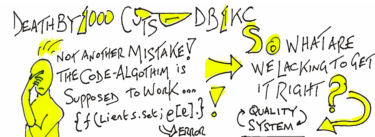
Use Jidoka to Avoid Death by 1000 Cuts
I’ve learned from experience the need for tech teams to adopt jidoka as a basic design consideration: getting it 100% right the first time with…
View article