Home > Managing to Learn> A3 Dojo

A3 Dojo: Share and Discuss A3s with Other Lean Thinkers

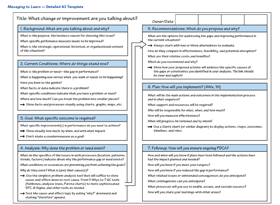
Welcome to this shared space for A3 thinking, which we¹ve designed to be a resource for lean practitioners to ask and discuss A3 questions, share common problems, and work together on ongoing challenges. This area builds on a conversation about lean management that was launched by John Shook¹s book Managing to Learn: Using the A3 Management Process to Solve Problems, Gain Agreement, Mentor, and Lead.
Below you will find a "wall" where you can post your A3s, ask questions, coach others and be coached yourself. You can also read an ongoing A3 column, written by experienced senseis, that teaches problem-solving and lean management, shares useful resources, and sparks new debate for the Dojo.
Please keep in mind that everything that you post on this site will be viewable to the public! We welcome your input, but caution you about revealing sensitive information.
 
Already registered? Please log in.
Email
Password
  Forgot your password?
    Remember Me
  or Become a Member of the LEI Community

The Managing to Learn - A3 Dojo

Postings for February 17, 2012

Subject: Implementing the A-3
Message: We have been working on the implementation of the A-3 tool for 2 years and are going into our 3rd year with limited success.
We have had A-3 documents that literally have an entire 3 ring binder worth of detailed information as support documentation to others that just never seem to get off the ground.
What is the secret to really geting the A-3 process ingrained?
Is it by management review of where the A-3 documents are themselves ?
If anyone has any suggestions I would appreciate any help.

Thanks,
Posted 2/17/2012 3:06 PM by Ray Krivsky send a private message to this person
Comments (2) 
 
Message: Ray,
Thanks for the question. You are definitely not alone on this issue, so with that, I want to start by encouraging others to share their thoughts too. Here are a few things to think about and get the discussion rolling:

When people ask about making the A3 "successful" in their organizations I usually start with asking, does the organization have a common understanding of what "success" is? This serves as sort of a baseline from which we can compare what we are observing, and look for gaps. Gaps which are unique to your organization. In A3 thinking terms, we are trying to grasp the situation. A wise man once told me, "general question, general answer." So we can offer you some general things to look for, but the best countermeasures to your problem will be unique to your organization. So start here.

Next, does this vision view the A3 as a reporting form or a process to gain alignment and agreement through engaging others.......all the while developing thinking problem solvers. Unfortunately, if the A3 is just a reporting format, it will not become ingrained. But if the A3 is your "portable white board" for engaging others, it's chances for success are greatly improved.

Finally, from Managing to Learn, "it takes two to A3". This isn't a solo process. So how it the mentoring going? Are people working projects with others, but without mentoring from their leaders? This certainly will not work long-term. If the mentoring IS occurring, what is the quality of the mentoring? Are the mentors asking carefully crafted questions that both reveal the thinking of the A3 owner without taking ownership of the A3 away? Or are the mentors essentially providing the "answer" during the dialogue? (e.g. Have you tried "x"?, Why isn't there more data on quality rejects?, Shouldn't cost be weighted more heavily?). Questions such as these suggest an answer or a direction, begin to usurp responsibility from the A3 owner and eventually disengage them from the process. "Why bother, I'll just do what I am told." Personally, I find mentoring A3s with carefully crafted questions to be the most challenging part of the process. After years of practice, I still have to think carefully before I speak. You can actually hear the gears slowly turning if you listen carefully.

I have a couple of additional thoughts on this topic, but I am going to stop here for now and ask others to join in. Dave or Tracey....anything you would like to add? Others? Again, I genuinely think this is a great question and it deserves some good dialogue.

Eric
Posted 2/20/2012 1:13 PM by Eric Ethington send a private message to this person
 
Message: HI Ray,
As Eric said this is a very good question, one that often takes discipline and accountability at many levels to get that ingrainment you speak of.

So to Eric's point I think an important aspect of the A3 is the differentiation of the "tool" versus the "process" behind the A3. They are two very different things. If it is labeled as the tool or template to "fill out" it can become a routine and a company can lose so much of the dynamic aspect of the A3 as the process (PDCA thinking).

You asked the question about the A3 process being ingrained, I think that is key in the differentiation. The process is what needs to be the focus point in creating the cultural aspect. This particular thinking (PDCA) is necessary to cut across all levels of the organization (President to the floor) and functional areas (manufacturing, engineering, R&D, etc). It very helpful to sustain when you can involve high level management and they hold everyone accountable for this process. (ie- used in meeting, gemba visits, and strategy deployment) When a company sees through the same lens then it starts to become a habit or part of the DNA instead of the "tool mentality" or the add on to what we do each day.

It really needs to be seen as an expectation of the job, not a choice to use when it's convenient. Again this requires high level leaders to hold some type of accountability for the thinking process. I believe this is often the missing piece that many are searching for to shift the culture. The nice part of the process is that is doesnt always require an A3. When this thinking (process) that you are wanting to be ingrained, is used in our daily work then asking questions at the gemba starts to become a habit. Amazingly, this habit spreads when results are noticed.

I can speak from my experience at Toyota, that my Japanese trainers practiced in this way. They were always present at our process asking us questions. Usually it started with What should be happening? (compared to a standard), and what is currently happening. Then you understood the gap, look at processes and asked why. If this type of questioning can be embedded at all levels and functional areas as stated above then the "process" of the A3 is being discussed which can make it easier to then use the A3 as the "tool" to visualize our discussions on paper and share that wisdom throughout the organization. The Japanese trainers did very few A3 with me themselves, but they ask me the right questions to help me visualize my own thoughts to formulate my A3.

In Managing to Learn, John Shook states that the A3 tool is only as good as the dialogue that creates it. To me he is speaking to the thinking process behind the A3. I really believe the questioning is the essence that changes the habits of our daily work. If leaders can embrace this as an expectation of their role, then it can begin to cascade downward among the ranks.

What is nice is people will start to notice the change subtly and begin to ask you, "How are you getting those results?", then that is your "pull" system to introduce the thinking to folks, not the "push" system which makes them feel its an "add-on".

Those are some quick thoughts based on my experience, maybe others will chime in as well! Thanks for the question.
Posted 2/21/2012 9:00 PM by Tracey Richardson send a private message to this person
Subject: 418 Bag Machine weak seal event
Message: I have recently been charged with facilitation of a Kaizen event. The team will untimately be the one to solve the problem, however, like many of you out there, I wanted to see how the problem could potentially be framed. I have went out to the gemba during this time and observed, and even worked with our lab on testing seal integrity changing parameters and variables. This is how I first put the A3 together and thought I had framed it pretty well and was going to look into when in the run the weak seals were occurring (beginning, middle, or end of the run).
Working with Tracey R. (AKA the toyota gal), she has coached me to a new point so I would like to share both versions with you. I have really seen the difference in version 2 and where it could potentially take the team from the original. Its just a small piece of the overall pie, but it is at least a much more manageable now.
Posted 1/31/2012 11:49 AM by Donald Ketzenberg send a private message to this person
Comments (2) 
 
Message: Revision 2 of the weak seal event
Posted 1/31/2012 11:50 AM by Donald Ketzenberg send a private message to this person
 
Message: Thank You so much Don for your willingness to share your learning with others here on the Dojo. I think you are doing a fantastic job and on the right path in the breakdown taking a small manageable piece at a time. I can't wait to see your continual progress.

You are "leading and learning" as we all are doing in this thing we call A3. The key is to develop good thinking/habits by going to the gemba, asking questions and engaging our people.

Great stuff Don! Thanks again for sharing!!!
Tracey
thetoyotagal :)
Posted 1/31/2012 1:24 PM by Tracey Richardson send a private message to this person
Subject: Problem Solving A3 - What are our Value Streams?
Message: I'm looking for some coaching on this early draft of an A3 regarding the determination of value streams. Thanks.
Posted 1/19/2012 6:57 PM by Neil Andal send a private message to this person
Comments (3)  view all
 
Message: One question - do your hundreds products fall into a reasonable number of family groupings that use the same resources in the same sequence? Sometimes the family groupings can lead you to a reasonable definition of a value stream.

Remember - the purpose of VSM costing is to properly allocate real material and operational costs to an end item or service a customer is buying and then to target the right improvements going forward. If a product is not in a state suitable for purchase when it leaves a business unit, it's not the proper candidate for a value stream.

You may be stuck because you're trying to superimpose lean concepts onto a traditional departmentalized org-structure. If you have the resources, see if the support can be organizationally allocated to the product family oriented value streams. If not, consider defining part family based value streams and support value streams separately.
Posted 1/31/2012 6:12 PM by Steven Bell
 
Message: David and Steven,
Thanks for the repsonses. I'll attempt to answer your questions as best I can to help further define the situation and look forward to any additional dialogue.

I added some clarification to the A3 on who are customers can be as well as the market niches. I do think that we can define our value streams by working back from our customers. For a particular product I think that we can do that fairly easily. One of our current hangups is that sometimes our customers will buy muliple products on an order. I feel that we have a hard time wrapping our heads around if we should consider those two streams (one for each product) or one large stream for that order.

Our hundreds of products can be grouped into a reasonable number of families (refer to updated A3). Product families A and D are the ones that have the most growth opportunity in the market. One thing that hampers us is that Products C and D line up with business units and resources well, A and B don't.
Posted 2/3/2012 10:56 AM by Neil Andal send a private message to this person
Subject: Sometimes waste is all around us- do we ask enough questions?
Message: Thought I would share this link that was passed on to me this weekend. It's a fun example of seeing waste in everyday type activities we all experience for time to time. Now, would we ask enough questions about the situation to get to the root cause or would be just accept the waste as ok? Have you been in this type of food line before? :) Enjoy!!

http://runningahospital.blogspot.com/2011/12/final-toast-to-ihi.html
Posted 12/11/2011 10:11 PM by Tracey Richardson send a private message to this person
Comments (0) 
Subject: A3 Timeline?
Message: Being very new to the A3 thinking, I'm still uncleas as to how long to allow for the A3 process. I gather that we must not rush to get to an "answer" but how do we balance that with the urgency of the problem at hand for the organization? I think that this will be a big barrier for my organzation to buy into A3 thinking - time spent (even with LT value) on problem solving in A3 systematic way vs. "immediate" solutions.
Posted 12/9/2011 12:11 PM by Vianey Gonzalez
Comments (3)  view all
 
Message: Vianey -
I thought about this more this weekend - and came up with another thought....and not to over simplify, but try and practice.

Don't let doubts keep you from trying. My sensei used to tell me, "concern don't make a kaizen." His point was, I hear your concern, but lets try an experiment and see what happens.

Sometimes we would spend hours arguing in our organization about everything that could go right or go wrong - and never try. The same sensei once accused me of misunderstanding PDCA. Rather than it standing for Plan, Do, Check, Act he said I must think it means, "Plan, Debate, Criticize, Argue." It was an eye-opening day.

So pick a problem and see if you can address it EFFECTIVELY using the A3. All of my comments in my last post are still valid, but perhaps after a few tries the results will speak for themselves.

Take care,
EE
Posted 12/12/2011 9:05 AM by Eric Ethington send a private message to this person
 
Message: Like Mr. Ethington said, it depends. However, there's a different way of looking at it. An A3 is a storyboard for an iterative PDCA cycle. Our company had a very complex powder coating issue to deal with 2 years ago that had both an urgent, customer facing side and a long term root cause analysis that we needed to handle simultaneously. We selected the 8D method, because it had a step for containing quality issues while the underlying cause was being determined. The A3 process kept track of it all so we didn't drop the long term experimentation when the short term containment fix was in place.
Posted 1/31/2012 6:22 PM by Steven Bell
Subject: Looking for practice A3's to use as examples in a training environment.
Message: In "Understanding A3 Thinking' (Sobek & Smalley) there is a practice problem solving A3. They walk you through a problem as you create your A3. Then, at the back of the book they provide an A3 solution. It's a great exercise and I was wondering if anyone know of other sources who provide practive A3s along with solutions?

Thank you for any help you can offer!
Steve
Posted 12/5/2011 4:47 PM by Steve Howell send a private message to this person
Comments (2) 
 
Message: HI Steve,
Have you taken a look at John Shook's Managing to Learn Book? You can actually purchase it on the LEI site. It has a story line between two characters (Manager-Sanderson coaching his middle manager Porter). They go through 5 iterations of this A3 as he learns the PDCA )Plan do check act) process. It shows the learning and what questions a coach would ask during this process. I would definitely recommend it. It is a book that you can always use as a reference in my opinion. I actually teach a 2 day session using this book at the LEI conferences where we also work on a personal A3. Let me know if you have any questions. Tracey
Posted 12/5/2011 9:23 PM by Tracey Richardson send a private message to this person
 
Message: I have both of these books and I use them all the time as a reminder of what I need to be doing. They are the best on the market! Recommend +++++
My organisation is vast and bureaucratic. I am doing my bit to introduce the A3 way of thinking at my level (Middle Management), but fail to see how I can influence Higher Management to buy-in. Any ideas? Thanks. Merry Christmas. Bill
Posted 12/23/2011 7:51 AM by Bill Evans send a private message to this person
Subject: TQM/Lean Manufacturing
Message: How would you decribe the differences between TQM/Lean?
Posted 12/4/2011 11:43 PM by Liam Cassidy send a private message to this person
Comments (3)  view all
 
Message: Liam -- as Vitezslav says it is an interesting and important questions for those of us in the lean community. Since we don't really have any experts (just leaners) at LEI I will respond briefly on our behalf. I agree with the information Vitezslav shared in his very good response. Lean and TGM have a common ancestor -- a grand-daddy in fact.

The lineage goes back to the scientific method. Shewhart built it into the thinking of statistical process control. In Six Sigma terms it is DMAIC. Deming took it to Japan after WWII and used it to help launch the quality movement there that became TQM. He called it the Deming Wheel. Toyota picked up on the cycle at the same time they were beginning to develop the TPS principles and tools for Just-in-Time and Built-in-Quality. Following the TQC cycle which had evolved into PDCA was how they developed, shook-down, refined and still continue to improvement the tools and practices that we think of as lean.

Toyota's implementation of TQM started with Quality Circles and led to their system of strategy deployment. In the 60's led by an executive named Nemoto the Plan-Do-Check-Act cycle became their cycle or process for management. The A3 format which was first used in Quality Circles became a key management and development tool. In the meantime the TPS tools and practices continued to evolve and be refined through following the PDCA cycle of experimentation and learning. Here are a couple of quotes that illustrate the relationship.

“TQC originated from American-style QC techniques developed by Dr. Deming’s mentor, Walter A. Shewhart. With the arrival of Dr. Deming in 1946 these QC techniques were disseminated throughout Japan….TQC has become firmly established as Japanese Management’s most effective technique.”

Tacichi Ohno, Just-in-Time for Today and Tomorrow, 1988


“We have studied this many times, but just to make sure, let’s review it once more. The QC-type approach is 1) Market in (customer orientation) and 2) Turn the cycle of PDCA steadily.”

Masao Nemoto, Total Quality Control for Management, 1987


TQM and Lean may be just cousins but in Toyota they are more like siblings - fraternal twins maybe. I cannot imagine that there would be a lot more to TPS in Toyota than some early values and good ideas and efforts if they had not picked on PDCA as their process of problem solving and continuous improvement.
Posted 12/9/2011 7:43 PM by David Verble send a private message to this person
 
Message: Just one thought:

The focus of TQM was involving operators in preventing defects. It involved a change of thinking about operators, but the idea of reducing defects has always been widely accepted and understood.

The focus of Lean is elimination of all types of waste. It involves a change of thinking about processes and the definition of value. The strict definition of value added and non value added activities, was and is a revelation whenever it's presented for the first time. Once this concept is grasped, the team has new eyes to see waste.
Posted 1/31/2012 6:34 PM by Steven Bell
Subject: Scope of the A3?
Message: Hi all,

I'm wrestling a bit with the scope of my A3. I have several key objectives that need to be accomplished, but A3's seem to be best suited to tackling one key objective (ie. in "Managing to Learn" the obective is accurate, timely document translation.) I need to tackle matters like increasing revenue, increasing profits, improving productivity, reducing shrink, ensuring safety, and increasing product development velocity - all critical to our sucess, and all objectives I need to clearly address.

It seems to me that if I include all of these in my A3 I will not be able to dig down deeply on any one of them, making it superficial. On the other hand, if I dig down deeply on something the others will be neglected.

My initial approach was to pool all of these targets under "Reduce the waste" and make my A3 all about waste reduction, which in turn will positively effect the other objectives like revenue and shrink. But that still means superficial treatement of the critical objectives.

For those of you in senior management roles where your role is to achive multiple simultaneous objectives, how do you approach A3 planning?
Posted 11/25/2011 1:34 PM by Jason Rekker send a private message to this person
Comments (2) 
 
Message: Hi Jason,
We appreciate your question, its another question often brought up in our LEI conference sessions.

Let's talk a moment about the different types of A3's because I have a feeling it could impact how you may look at framing a few of the problems that you stated. Some could read what you are trying to accomplish, not necessarily what the problem is.

So some problems could fall under the "created" gap category. Those of which we call Strategy/Proposal A3's. In this situation we are trying to set a new standard.

Other problems are considered "caused" gap A3's. This is where you may not be reaching a particular standard.

There was a column back in August written about the different types of A3's, this could be useful information in regard to how you have framed some of your problems. Here is a link: http://www.lean.org/a3dojo/ColumnArchive.cfm?y=2011&m=8#Col1882

As the A3 owner you may have to decide how you are framing your problems. For example you mentioned "reducing shrink". So one could ask, "what problems are you having that are affecting your key performance indicators due to your shrink problem. As John Shook states in the Managing to Learn book, - What is the pain to the organization? Reducing shrink is what you are trying to accomplish but is it necessarily the problem. What problem is taking place because you aren't able to reduce it? Is it quantifiable? Are you able to quantify all these problems. Often my Japanese trainers would ask me- "how do I know its a problem"? Those are just a few things to think about.

To answer your particular question about trying to tackle various things in one A3, there are various ways you can do this. You have listed several different problems within your question. Many of which that are to me, more larger scope or "world hunger" type problems in which you will have to get to a "feed the city level". When you are faced with this situation you first must quantify your gaps by asking (with each problem) - What should be happening? and What is currently happening? Once you are able to recognize your gaps with each of your problems then you should begin breaking those gaps down into managable chunks/pieces. Let's look at one of your problems in this way.

Improving Productivity:

So what is your current productivity? What should your productivity be? The difference between those is your quantified GAP.

Then I look at that GAP and ask what are all the contributing factors to my gap(s). Are there smaller pieces to it that I can breakdown. For instance, by department, by shift, by equipment, by process etc. With a problem so nebulous such as improving productivity its essential to understand all the factors and begin to break them down into small pieces (small A3's). So think of it as having a MACRO level gap and you will be breaking down the gap into smaller(MICRO) more managable A3's. This is the only real effective method to ensure the gap(s) will be reduced. Otherwise if you try and tackle such a large problem in one A3 it will become overwhelming to try and solve 10-15 root causes and address those with even more countermeasures. As many have taught me, changing too many things at once is hard to measure.

So has a manager it is your job to understand the problems within your job scope, help your leaders visualize those problems by having standards. (standards show quick abnormality). Then begin to delegate smaller portions of the problems out to your leaders (like Porter and Sanderson). Follow up with them and they can report back and forth to you their progress as each one works on a portion of the larger gap. This should be done with each of your larger problems.

This is a great example of strategy deployment in regard to your business indicators (quality, safety, productivity, and cost). Looking at each one and asking questions regarding where we are in regard to our standards can be enlightening.

I hope this helps answer your questions! Thanks Tracey
Posted 11/26/2011 12:28 PM by Tracey Richardson send a private message to this person
 
Message: Thank you both for your thoughts. I understand the idea of utlizing the electronic format for finalizeing the A3. However, that still seems wasteful to me. In the end I am going to lean towards hand writte A3's, but if someone really wants to pursue the electronic version I will not stand in the way.
Posted 11/28/2011 11:02 AM by Joe Molesky send a private message to this person
Subject: "Pretty" A3's
Message: Does anyone have any thoughts around how "pretty" an A3 looks? I have always drawn up any A3 project in pencil. I see that most of the the documents posted here for review are very "pretty" and generated in a computer. I have always stressed that the form is simply there to display their thought process and filling it out should not be laborious. So, I recently started as Lean/CI Manager at a new company and will now be coaching folks here on A3 thinking. Do you think I should stress hand written A3's as much as I have in the past? Or, should I let them be free to use whatever means neccesary to fill them out?
Posted 11/23/2011 10:55 AM by Joe Molesky send a private message to this person
Comments (2) 
 
Message: Hi Joe,
Thanks for your question, it is a very good one that I get asked alot in my various sessions. I will answer with my opinion based on my experience and how I was taught by my own Japanese sensei while at Toyota.

It's funny you use the word "pretty" because I tend to say the same thing. In our world of technology (software) today, it is very easy to make them look very advanced, colorful, and technical. I've even seen some with embedded macros or hyperlinks, perhaps for me, a little too much!

In my experience with my Japanese sensei(s) we were taught to always grab a pencil (since we would probably be erasing), and a 11 x 17 sheet of paper and head out to the Gemba (work area/process). Now if we journey back to 1988 (when I started at Toyota) you will remember not many manufacturing facilities including Toyota had computers on the production floor. So during that time it wasn't an option to make it "pretty". For us "pretty" was how well your handwriting was, if you stayed in the lines, and if outlined your boxes (Plan-Do-Check-Act).

It wasn't until the mid to late 90's did we start to see computers make it to our production floors and programs like Word and Excel surfaced to allow us the capability to transfer what we had on paper to a computer and print. WE all like it, but I will never forget how angry our trainers would get when they would find us "doing" our A3's on the computer. There exact words were, "no good"!

Now let me explain what they meant by "no good". It wasn't that they were against us putting them on the computer, what their concern was that we were spending more time at the computer than at the gemba. If you were a leader it could also send the wrong message to the workers and create bad habits as they would often state. They didnt want the computer to become the place for answers, which in most cases if we arent seeing with our own eyes we call those assumptions and that could lead to symptom fighting instead of root cause. They would coach us to wait til we were finished with the A3 before we put it on the computer, so basically when its done and you have completed the PDCA process--then transfer it on the computer if you desire or if someone in high management is expecting that format.

I truly believe and continue to teach the "pencil and paper approach" at the gemba, gather and analyze thoughts or data; engage, involve and challenge others at the gemba to help follow the process by asking the right questions. To me that is "pretty"!! Remember a good A3 is only as good as the dialogue that creates it and that dialogue can only be done with the people who do the work at the process.

I hope this answers your question as well as others who may have wondered as well. It's up to us as a lean community to keep the essense of the thinking out on the floor not behind a desk. Tracey
Posted 11/23/2011 1:45 PM by Tracey Richardson send a private message to this person
 
Message: Very good question and very nice answer. Thank you for both - I would like to only add my experience and point of view towards the theme. I have had worked with Toyota in the past as well and honestly most of the A3s I have encountered has been electronic versions, but I have had encountered the A3s first time only in 2003 and most of them has been created for the purpose of cross-nation multi-team solving a problem (in my case in logistics), so after going to Gemba to grasp the facts using the electronical versions and an e-mail Nemawashi process seems logical.

Also a handwrite point of view matters - even I do start my A3s in my blocknotes, I have to re-write to electronical version due a simple fact it is difficult to read my handwriting. So a common sence approach would be a good answer to your question too, at least from my perspective.
Posted 11/25/2011 4:10 AM by Vitezslav Pilmaier send a private message to this person
Subject: SMED with A3
Message: Does anyone have an example of a SMED project using A3, that they would consider sharing?
Posted 10/10/2011 6:13 PM by Todd Pait send a private message to this person
Comments (0) 
Subject: A3 template... to what extent?
Message: Hi friends,
In my company we are creating an A3 template to encourage people (especially shop floor workers) to use it as a methodic way to face problems. The idea of creating a template is to make easy for everybody to use tools that may help during the process (5 why's, Ishikawa diagram, etc.). However, I feel this may limit their thinking process... what do you think about it?

Thank you very much for your help!

Luciano
Posted 10/7/2011 10:11 PM by Luciano Rosso send a private message to this person
Comments (2) 
 
Message: HI Luciano,
Thanks for your post. I think it is great you are trying to create a template to engage your company in problem solving (PDCA-plan do check action).

As I get to experience various industries all over the U.S. I often find that following a specific template (fill out the boxes) can often times hinder our progress especially if the A3 is a newly introduced "tool". There is often fear around "filling it out incorrectly", and that misses the whole purpose behind it. The A3, as John Shook refers to it in the Managing to Learn book, is a "visual manifestation" of our thinking. A good thinking process that engages leaders and workers in a dialogue regarding the process, should be the focus that is underlying to the A3.

I have seen various templates in my time, and I couldn't say a specific one is better than the other, but what I do focus on again is the thinking that goes into it with a series of questions at the gemba involving the people and asking their opinion. This is how you encourage them to get involved through leadership interaction.

The template should evolve through the questions that are asked that helps "grasp the situation"
What should be happening?
What is currently happening?
What is the Gap?
Can the gap be broken down?
Can I visual a process?
Can I see a point of occurence?
Then I begin to ask "why" this is happening, and countermeasure the situation and follow up.

As you can see by asking the right questions that follow the PDCA thinking process them the template manifests itself through this engagement at the process.

Then of course utilize the tools like fishbone, tree diagrams, graphs etc to help the reader visualize the thinking behind the A3. The A3 is not only to capture the thoughts but is used for shared learning and development of others, as well as gaining consensus and buy-in.

It is a very dynamic tool that can change the way a company does business. So don't limit their thinking as you mentioned but empower them by engaging them where their work is being done and asking their opinion. I believe the rest will take care of itself. Good Luck! Keep us posted on your progress!! Tracey
Posted 10/8/2011 9:22 PM by Tracey Richardson send a private message to this person
 
Message: Hi Luciano,

I find the A3 thinking embodied in a template very helpful. My company use a template to help focus the 9 step problem solving process we use here. I can send you a copy of the template if you like? Just let me know.

Best wishes.

Bill

Shrewsbury
United Kingdom
Posted 10/24/2011 11:14 AM by Bill Evans send a private message to this person
Subject: A3 in Manual operation
Message: Hi Frnds
I have developed a strong belief in A3 methodology, but i have a problem is implementation due to the level of education in my department (grade7), the age (Avrg 55), the process very manual operation and funds to implement very linited. how one can introduce effective Lean tools is such operation?
Posted 10/7/2011 2:30 AM by Sphiwe Mthembu
Comments (1) 
 
Message: Hi Sphiwe,
Thank You for sharing and asking a great question. As you know the A3 process can be very dynamic but at its essence it is really about leaders being willing to go to the process where the work is being done and ask questions.

I find that many times in a work environment across various industries the A3 is taught as a cumbersome process and many tend to feel overwhelmed and frustrated. A better approach to A3 is to think about it as a way to ask questions that follows a format (PDCA-plan do check action) that engages, involves, and challenges the person responsible for the work. Remember each worker is a professional at what they do and know the process better than we do sometimes.

If I am a leader in the organization and I want to begin to implement Problem Solving or A3 "thinking", then as a leader I will start by just being present on the floor (gemba). I will observe the process(es) to see what the worker is doing, then I will begin to engage them with some questions. You can call this "Grasping the Situation".

To grasp the situation a leader could ask questions like:

How is your process running today?
What is currently happening?
Are you experiencing any issues?
Where are you in regard to your goal?

Questions like this can engage and involve the worker to think about potential discrepancies they may accept as the norm, which could be wasteful action for them and the company. It is our goal as leaders to get them to recognize that and support them in improving the process.

It also can help establish standards in an organization if none exist. These type of questions can help form the plan phase of an A3 trying to understand the problem with the workers input and involvement that together you can formulate countermeasures and then implement.

This is how I would approach an organization that is new to A3 and that way of thinking, just start by asking them questions about what should be and what is actually happening. Im willing to say that you will witness a small change in your workforce day by day due to the empowerment and recognition you will be giving them by asking their opinion. I hope this is helpful. Tracey
Posted 10/7/2011 10:39 AM by Tracey Richardson send a private message to this person
Subject: A3 & Six Sigma
Message: Angela, the A3 can be a pretty flexible tool even for highly technical data. I'm an Air Force certified BB and use of the A3 is mandatory throughout the AF. I recently was taking some master's courses in data mining and on a whim, decided to submit one of the projects using the AF A3 format (admittedly not ideal for a data mining problem, but still worked). After that, the professor wanted all of my projects submitted as an A3, because it was so concise. I've attached one, not meaning it to be an example of how to do an LSS A3, but to show some of the possibilities of an A3 for technical communication.
Posted 9/29/2011 3:40 PM by Jon Kidder
Comments (1) 
 
Message: Jon - Interesting. Can you send me your attached file please? Thanks. My company's filtering system has prevented it from downloading in the normal way.
william.evans@jobcentreplus.gsi.gov.uk
Many thanks.
Regards.
Bill
Posted 12/23/2011 7:55 AM by Bill Evans send a private message to this person
Subject: A3 & Six Sigma
Message: Angela, The answer is "it depends."
If your company has a strong and working six sigma culture use DMAIC. In other words, if lots of the organization knows six sigma, don't push water up hill. If the six sigma culture is weak, then use the A3. A3s are flexible and so can easily be used for greater depth of analysis, including use of statistical tools.
Why is A3 preferred? A3 principles require several behaviors that are vital for getting a sustainable solution to the problem, but are often missed in six sigma. These include: careful observation at gemba, engaging the front line in developing the analysis and countermeasures (an A3 isn't complete unless it is bought into), and strictly following check-act. These principles help to create a learning organization.
Posted 9/15/2011 3:19 PM by Mike Bresko send a private message to this person
Comments (1) 
 
Message: FYI...I have created A3 templates with standard questions with DMAIC on them to take six sigma thinking/learning into the A3 "coaching" to learn thinking. The A3, 1 page story board helps leaders and learners learn and apply DMAIC and A3. The power of A3 is the flexibility and the thinking is all about teaching, coaching. You can use six sigma AND A3 ata same time and avoid confusion.
Posted 9/18/2011 9:34 AM by James Frost send a private message to this person
Subject: A3 & Six Sigma
Message: After attending the University of Kentucky Lean Program, I wanted our company to embrace A3 problem solving. The problem that was chosen for the first attempt seemed to be a little too technical to use A3. When should Six Sigma be used and when should A3 be used. Any clarification would be appreciated. Thank you!
Posted 9/12/2011 8:32 AM by Angela Augenstein send a private message to this person
Comments (3)  view all
 
Message: Angela,
Coming from a strong six-sigma company that introduced the A3, I can't resist responding to this post too. The short answer is do NOT pigeon hole the A3 to one type of problems and six sigma to another type of problems - They are very complementary and should be used together. If you read, "Managing to Learn" by John Shook, one key learning is that the A3 is a process to facilitate dialogue. This enables all stakeholders to understand the problem clearly and greatly enhances the ability to get buy in.

So back to your question. Is there a type of problem in which someone would NOT want the stakeholders to understand and would NOT want their buy in? Of course the answer is, "no." So the real question is how do you use the A3 and Six Sigma effectively together?

Here is one approach that worked for me. That doesn't mean it is the only answer - so think of this as a thought starter:

1. There were certain types of problems that were neither appropriate for an A3 or a six sigma project. We just did those (obvious unsafe condition, obstacle in the aisle, etc...)

2. There were certain types of problems in which a six sigma project was not necessary or appropriate. We would work those via an A3.

3. There were certain types of problems in which we needed a six sigma project to tackle. We would still run a six sigma project, but utilize the A3 to manage dialogue with various stakeholders - turning to the project detail only when necessary. One failure mode of six sigma projects is getting others to really understand not only the technical details, but why they are important. The A3 can help to bridge that. Personally, I had issues keeping champions focused at the right level of detail during gate reviews - I utilized the A3 to manage that too (again - the project detail exists and can be referenced, but the A3 is the focus when engaging stakeholders).

Another thing to think about - and I leave this challenge with most six sigma organizations I work with - can the A3 also be your project contract. Look at your contract form - it contains much of the same information that is in the upper-left section of an A3. Unfortunately, the idea of a "contract" implies a degree of finality - once established and signed it shouldn't be changed. Are we really so smart that we know at the out-set of a project exactly what the scope should be, how the problem should be measured, etc...? I don't believe so. The A3 allows these same issues to be addressed, but in a more interactive setting.

Hopefully coupling these thoughts with the great insights Tracey has offered on they various types of A3's will help your organization get the most out of the A3.

Let us know how it goes. EE.
Posted 9/14/2011 11:30 AM by Eric Ethington send a private message to this person
 
Message: DMAIC in my experience and reported by other practitioners works perfectly fine with A3's
Posted 9/17/2011 4:09 AM by Kevin Ryan
Subject: A3 flow
Message: Hi friends! I'd like to introduce A3 in my company as a standarized way to face problem-solving processes. But I have some doubts about who should be responsible for the generation, monitoring and updating of the A3 document, if it should be done in the meetings or in the gemba, and in general, how should the A3 "flow". Thanks for your help!
Posted 9/10/2011 7:20 PM by Luciano Rosso send a private message to this person
Comments (2) 
 
Message: Luciano -- thanks for your questions about some of the fundamentals of A3 use. Let me respond with some thoughts on the Whats, Whos, Hows and Whens of A3.

What: In my experience the A3 story board is a change leadership tool. It helps its creator(s) take leadership by telling a story that demonstrates in a recognizable problem solving format that a change makes sense.

Who: The creator(s) of A3s should be those with the responsibility for leading change to address a problem or make an improvement in an organization or group. That responsibility generally comes from the creator(s) role in the organization or company and can either be assigned or come from recognizing and responding based on role to a problem or need. The creator can either be an individual or team. A3s can be effectively created by a group in a meeting but should always be developed after seeing and hearing what is actually happening in the situation to be changed at the gemba.

How: Just as a change can seldom be decided and executed in an organization by a person or team acting unilaterally, an A3 can be drafted by its creator(s) cannot be "completed" by its creator(s) alone. The sign-off boxes at the top an A3 are there for a purpose. When they contain initials beyond those of the creator(s) it indicates others have read the A3, had input to its content and agree that the story for change it tells makes sense. A3 should "flow" from hands and minds of its creator(s) to the eyes and, ears and minds of those who have a stake in a change.

And who should monitor an A3 after its change is in execution? -- certainly those who signed-off on it but also anyone who has a stake in or is affected by the change. The creator(s) of an A3 have the responsibility to update its story with reports on the progress and impact of the change it proposed.

When: The A3 is a communication tool for taking change leadership. Its purpose is to create discussion of the nature, need for and sense a proposed change. It should be used when the creator(s) need to engage others in a discussion that requires sharing the creator(s)'s thinking in an agreement-seeking process that goes beyond direct discussion in the immediate stakeholder group. The A3 is also a valuable tool for documenting and tracking your thinking and efforts even if you are talking to yourself.

thanks - David
Posted 9/10/2011 8:33 PM by David Verble send a private message to this person
 
Message: The creators of the A3 doesn't neccessarily need to be those with responsibility for leading change. A3 owners can be anyone who has a problem that they would like to resolve. Generally this won't and shouldn't neccessarily be the managers, but the actual staff that do the work. The best people to fix problems are those who actually do the work.

By going to the gemba, end to end, and speaking to those involved in the processes that surround the problem, the owner generally should get agreement on what needs to be done, so that when you have to pitch the countermeasures to management, its pretty much a done deal. Again, you don't need to be a manager to do this.

As far as I am aware, the A3 needs to be owned by an indivudual, not a team. Ownership of the problem is important.

You will have large problems, that a manager might be assigned to resolve using the A3 process. But I would encourage the use of A3 to remove the waste caused by all the smaller issues as well.
Posted 9/12/2011 10:43 AM by Michael Jones
Subject: The Hoshin X-matrix, again
Message: Uploaded is a PDF of my A3X or X-matrix template, with instructions. The X-matrix is used as part of the process of hoshin kanri (aka strategy deployment) to integrate multiple A3 team charters around strategic themes and a "balanced scorecard" of process improvements and financial targets. For comprehensive instructions about how to build an X-matrix, refer to Ryuji Fukuda's Building Organizational Fitness (Productivity Press). Also see my own Hoshin kanri for the lean enterprise (Productivity Press).

I will shortly post a complete set (the example from my book) of an A3X and its related A3Ts (team charters).
Posted 9/9/2011 4:07 PM by Thomas Jackson send a private message to this person
Comments (0) 
Subject: A3 feedback
Message: This is my first A3 draft report to be use with our Continuous Improvement Team. Any and all feedback is welcomed and appreciated.
Posted 9/6/2011 11:49 AM by Mario Arevalo
Comments (6)  view all
 
Message: Hi Mario,

Do you have an Ideal future state Value stream? I would of thought the goal was at least 1000 parts per day, given the demand.

The pareto is very informative with some obvious low hanging fruit but it's a little disjointed. The Ideal future state, with an interim plan and a series of planned problem solving through PDCA, finding root cause etc may help clarify your direction.

Well done for getting started. Good Stuff.


Tim Anderson
Posted 9/19/2011 8:07 AM by Timothy Anderson send a private message to this person
 
Message: Hi Mario,

Can you draw your "cell" and show how parts flow in it.
Also what is the actual cycle time vs planned cycle time.

More feedback after your reply.

Emmanuel
Posted 10/13/2011 3:48 AM by Emmanuel Jallas send a private message to this person
Subject: A3
Message: Hello Lean Team:

Attached is an A3 we use to analyze options regarding construction. This is the starting point and as a team we use this as a working document until all information is collected – then this will go to upper management. The details within has proven as a very effective way to make decisions. Our team developed this from information pulled from the TPS model. Please note for confidentiality the names are in white font. Any and all feedback is welcomed and appreciated.

STAY LEAN
dg
Posted 9/2/2011 4:54 PM by Douglas Gray, III send a private message to this person
Comments (2) 
 
Message: Douglas - Thanks for the posting. Here are a few quick observations:

1. In the current situation there is a mention of a $120K budget, but the goal refers to a $96K budget. How are the two numbers related? It is important that all stakeholders can easily understand the story the A3 is telling, and this may add confusion.

2. I understand you need for confidentially, so this next comment is very general - be certain that your analysis breaks down your gap between your current state and your desired state. What are the factors keeping you from currently staying within budget and do your recommendations actually address these factors? This is a common failure mode in A3's in general - failure to break down the contributors to the gap. When this component is missing I have often seen a set of recommendations that reads more like a brainstorming list of ideas and a line of reasoning that selects one of the items.....yet the original barrier to hitting the target is not identified - so the problem still exists even in the recommendation.

Again, not sure if this is the case with your A3 - but please be careful in this area.

3. I would encourage your team to actually develop some logic and make a recommendation before going to senior management. Use the A3 process to drive a dialogue with senior management - this allows mentoring to occur and the A3 to be more value added. They may or may not agree with your recommendation and a different course of action my ultimately be selected, but by starting with a recommendation you will have a much more "rich" dialogue and everyone will better understand each other.

Good luck and let us know how it goes.
Eric
Posted 9/3/2011 9:47 AM by Eric Ethington send a private message to this person
 
Message: Thank you for the feedback. You make a great point with the notice related to the (2) different budgets; this should be 96k. The 120k was what the budget was prior to soft costs used for the architectural and design fees. As the constructor, from historical data I knew when the target value goal of 96k was published for construction, furniture, furnishings, permit and equipment to meet the desired state of the design criteria for the scheduled scope; I suggested putting the different option schemes into the A3 for analysis. These different option schemes listed within the analysis window (still under development) are intended to identify which components such as finishes, furniture, etc. best fit the facilities needs and wants, but meet the target value. I want your feedback again once he A3 is complete. Thank you Eric, I greatly appreciate your input.

Respectfully,
Doug
Posted 9/5/2011 12:23 AM by Douglas Gray, III send a private message to this person
Subject: My A3 for your feedback
Message: Hi Everybody,

I just want to share with you our Supply chain's strategy A3 for your feedback. This is a first draft that will be reviewed and validated with the management.

Best regards
Rodrigue
Posted 9/2/2011 6:04 AM by Rodrigue Banaken Ekandj send a private message to this person
Comments (2) 
 
Message: Hi Rodrigue,
For your first draft it is a very good example. Thank you for sharing with us.

This is a created gap A3, meaning you are trying to get to a new ideal state. Within the A3 there are several caused gap opportunities based on your current state. So I like to call these Macro level A3's and it will take many micro level PDCA cycles (A3's) to completely reach your Ideal state by the end of 2013. Each one will have to be measured back to the gap.

I saw a couple of things in the background that you might take a look at. Some of your bullet points may be a little "in the weeds" for a strategy level A3.

For example: Delay in vendor payments- that could be read as a "causal" statement to
some viewers from the outside. I would ask, "What problem is that creating on a larger
scale"' ? Sometimes we call that scope-creeping! "So what key performance indicator is it
effecting that feeds back to your larger goals above? When you get into the smaller
processes of some of these issues it may take you to that level. Just a thought. It is also
just my feedback as an "online coach"' not being able to discuss specifics.

On your right side within the action plan will all your potential causes listed need to be
addressed in order to reach the ideal state? Will all the goals and activites have specific measures back to the gaps? It's important to realize the complexity of a strategy level A3 and all the follow up to each specific one will need to show progress.

Think of it as a "world hunger" project and you will be breaking each one down into "feed
the neighborhood" levels.

It's a very good start, we will look forward to seeing your progress if you are willing to share
with us. Let me know if you have any questions. Hope this helps. Tracey
Posted 9/2/2011 8:08 PM by Tracey Richardson send a private message to this person
 
Message: Hi Tracey,
I would like to thanks you for this very very helpful feedback. You're totally right when you say it's a macro A3 cause it concerns the whole supply chain department. The department has 4 units: Demand and Supply planning, Procurement, Customer service and Physical logistics. Each unit is actually working on their A3(micro level PDCA as you said) based on the department's one. There was a lot of discussions on the bullets points in the background with the department's heads to come out with this list. Will use your questions and remarks to challenge the guys on th next review. Thanks fo that.

From the A3s, our main KPIs those that are closely linked to our objectives will be transformed into meaningful measures that will be tracked on a daily and weekly basis to be improved by relevant actions plan.

Thanks once more for this very useful feedback. Will keep sharing my progress with you. Best regards. Rodrigue.
Posted 9/5/2011 7:14 AM by Rodrigue Banaken Ekandj send a private message to this person
Search the Dojo:
My A3 Dojo Posts
[none found]
My Followed Threads
[none found]
Most Active Threads